

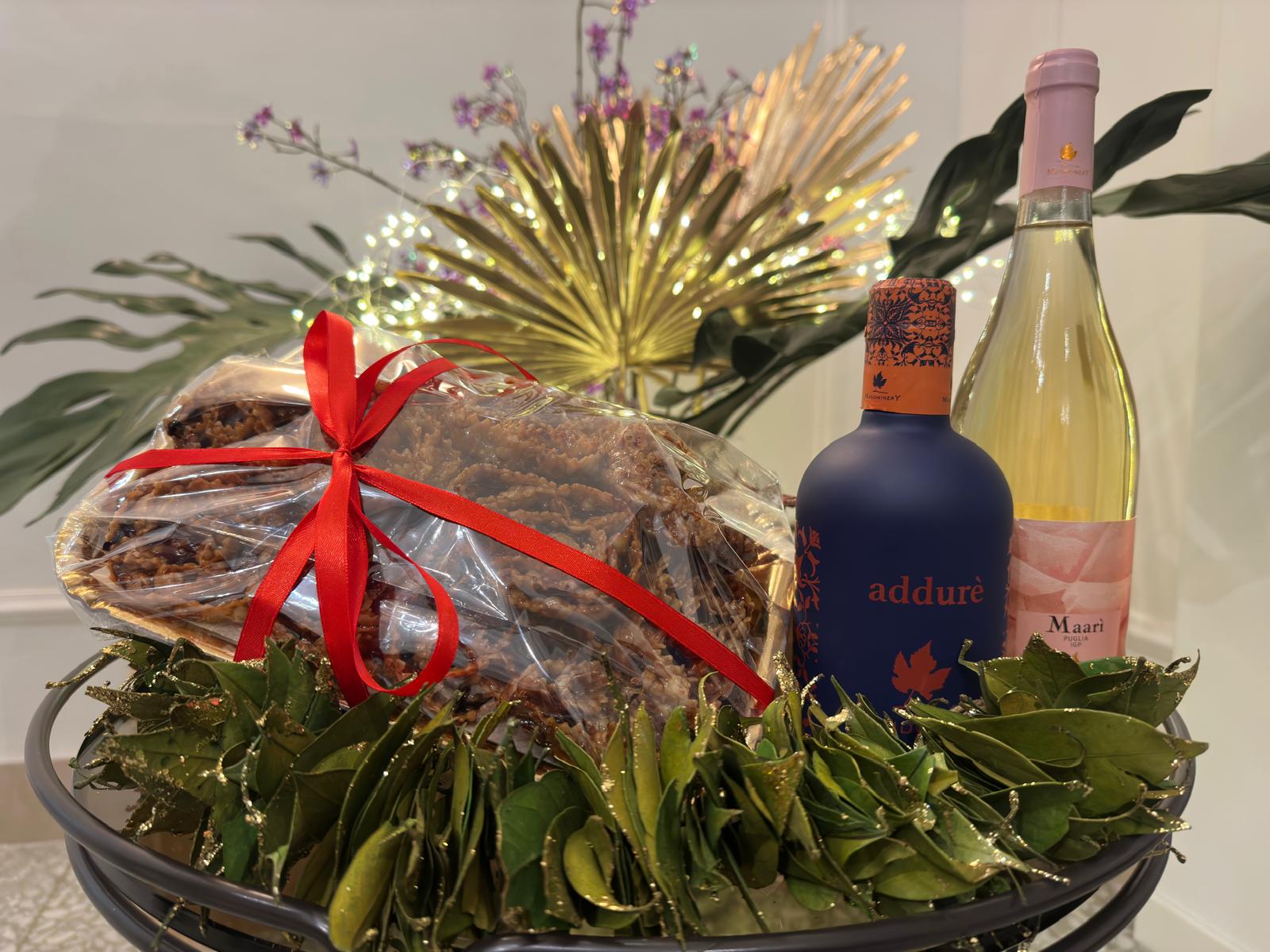
Christmas in Cerignola is a time of great celebration, a tribute to the family, religious and cultural traditions typical of Southern Italy. This magical period stands out for the strong sense of community that brings the city’s inhabitants together.
Among the most deeply felt customs, the Nativity Scene stands out, the symbol par excellence of the Nativity. Every family sets it up with care, enriching it with details that recall Apulian country life. The striking Living Nativity, on the other hand, turns streets and squares into a unique spectacle, involving the whole community.
The musical magic of the Zampognari, with their bagpipes and pipes, accompanies the celebrations, filling churches, streets and squares with traditional melodies and creating an enchanted atmosphere.
Christmas in Cerignola is also a feast of flavours. Among the most beloved sweets, the Cartellate deserve a special mention, true stars of the Christmas table. Characterised by their rosette shape and the irresistible scent of honey or vincotto, this sweet represents an ancient tradition that for generations has brought young and old together around the pleasure of sharing its authentic flavour and festive atmosphere.

Recipe
Preparing Cartellate requires care and a certain manual skill. After working the dough, strips of pastry are obtained and rolled carefully, creating the characteristic circular hollows. Once shaped, the cartellate are fried until golden and crispy, and then dipped in vincotto, which enhances their flavour with an intense and enveloping sweetness.
Ingredients
- 1 kg of 00 flour
- 100 g of sugar
- 250 g of extra virgin olive oil
- 250 g of white wine
- A pinch of salt
- 500 g of vincotto
Preparation
- Preparing the emulsion
In a small saucepan, combine the white wine and the extra virgin olive oil. Heat gently, bringing the temperature to about 35°C. - Preparing the dough
In a large bowl, sift the 00 flour and form a well in the centre. Pour in the wine and oil emulsion, then knead until you obtain a compact and smooth dough. Wrap it in cling film and let it rest for about 30 minutes. - Shaping the sheets
Divide the dough into two parts and work one half at a time. Flatten the dough and roll it out with a pasta machine or a rolling pin, starting from the thickest setting until you reach about 2 mm. - Creating the strips
From the sheet obtained, cut rectangular strips about 3 cm wide and 30-35 cm long. Pinch the two edges of the strips with your fingers to create circular hollows, spaced apart from one another. - Forming the roses
Roll the strips up on themselves to form roses. Gently pinch the joining points to prevent the cartellate from breaking during frying. - Frying
In a deep-sided pot, heat plenty of sunflower seed oil until it reaches 170°C. Fry the cartellate one at a time, cooking each side for 3-4 minutes, until evenly golden. - Draining
Drain the cartellate from the oil and lay them on paper towels to remove the excess grease. - Final dressing
In a separate small saucepan, heat the vincotto. Dip the cartellate one at a time, soaking them on both sides. Once well coated, place them on a plate and serve at the table. Cartellate with vincotto have a more intense and less sweet flavour, which makes them an excellent variant for those looking for a more original taste.

